



85 models in this section
Delivery time
Colour


-25%
Pre-order, 60-90 business days
Brand: ASM MEBLE (PL)
ID: 4596
200 × 35 × 148 cm
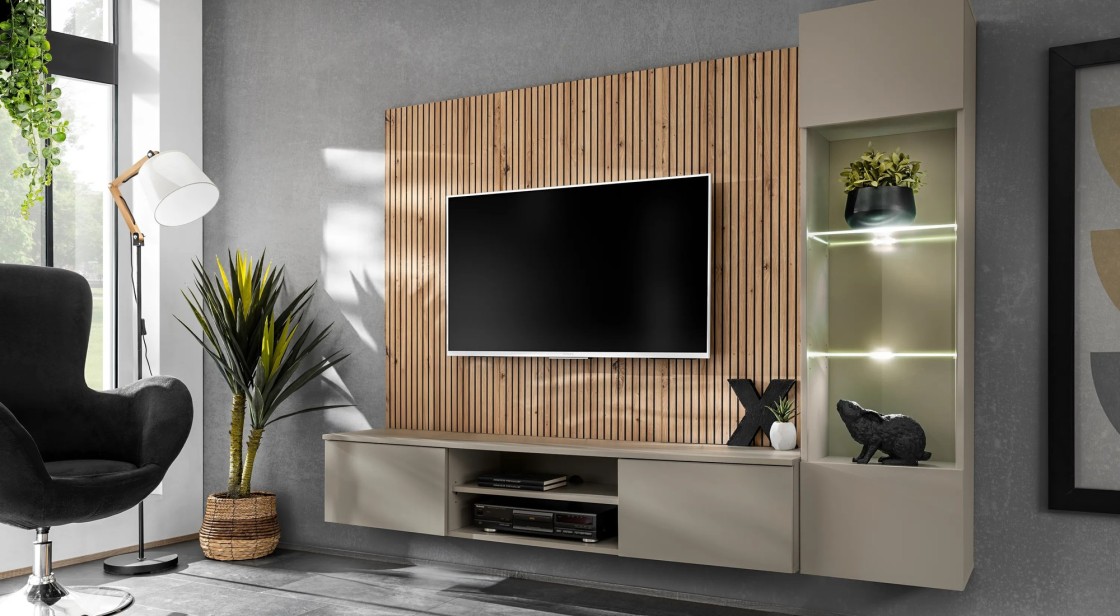
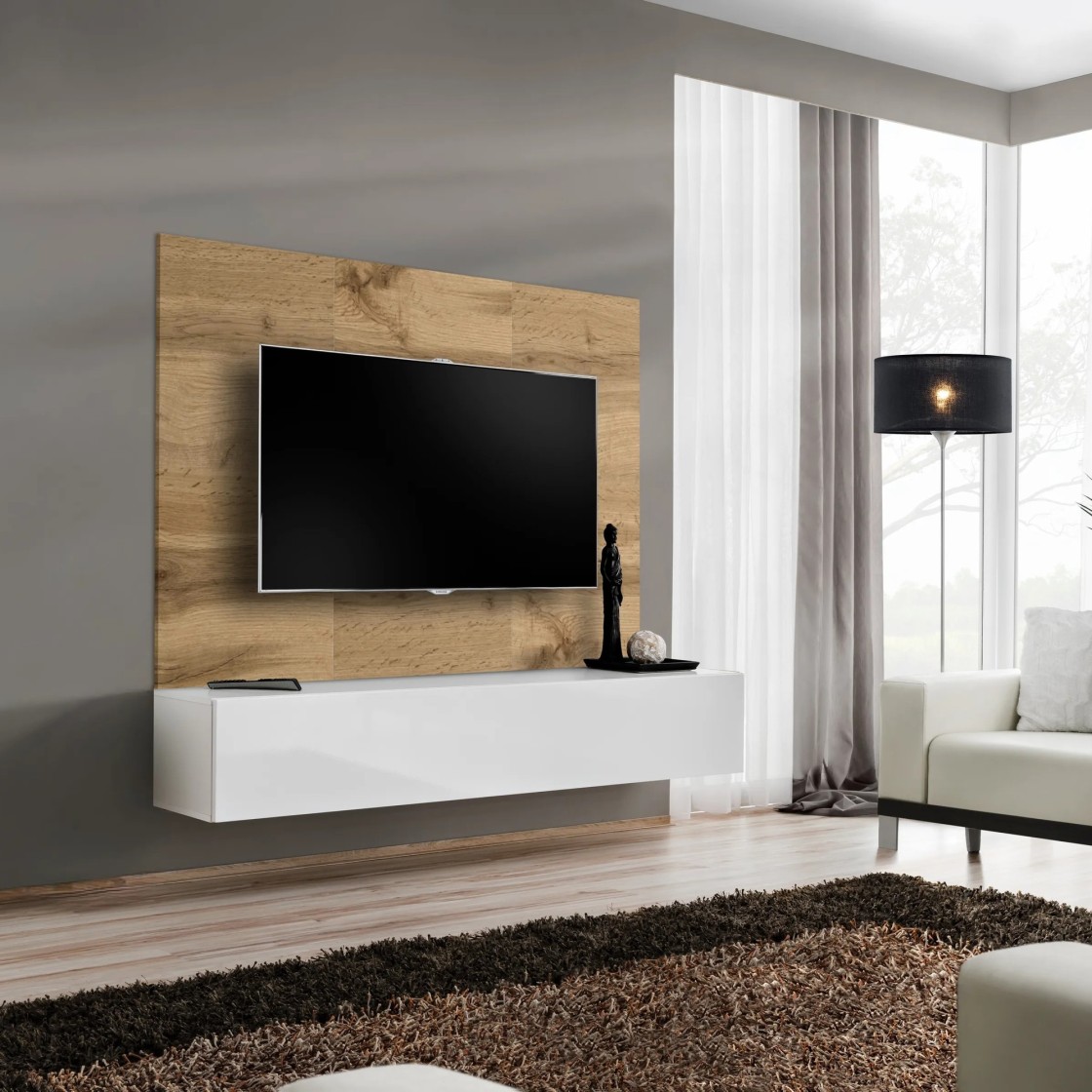
A two metre composition where an oak panel in close stripes covers the whole wall behind the screen, and the furniture below it hangs clear of the floor. What t..
₪4 816 ₪3 612

-25%
OakPre-order, 60-90 business days
Brand: ASM MEBLE (PL)
ID: 5108
160 × 40 × 158 cm
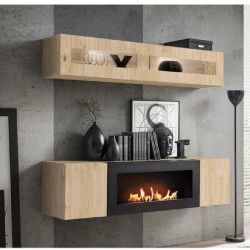
A compact pair: a panel for the screen with a chest holding a bio fireplace below it. The whole composition takes 160 centimetres of wall, and the fire is real,..
₪4 949 ₪3 712


-25%
OakPre-order, 60-90 business days
Brand: ASM MEBLE (PL)
ID: 5141
180 × 40 × 148 cm
A composition in two parts: a wide wall panel for the television and a lower module with a bio fireplace built into it. It takes 180 centimetres of wall at a he..
₪5 070 ₪3 802


-21%
OakPre-order, 60-90 business days
Brand: HELVETIA (PL)
ID: 3655
200 × 45 × 196 cm
Dimensions: Width: 200 cm Height: 196 cm Depth: 45 cm The CELINE 09 wall unit includes: TV cabinet with three drawers and a niche Celine TYP 40, dimensions: wid..
₪4 888 ₪3 850
-25%
OakPre-order, 60-90 business days
Brand: ASM MEBLE (PL)
ID: 5058
160 × 45 × 120 cm
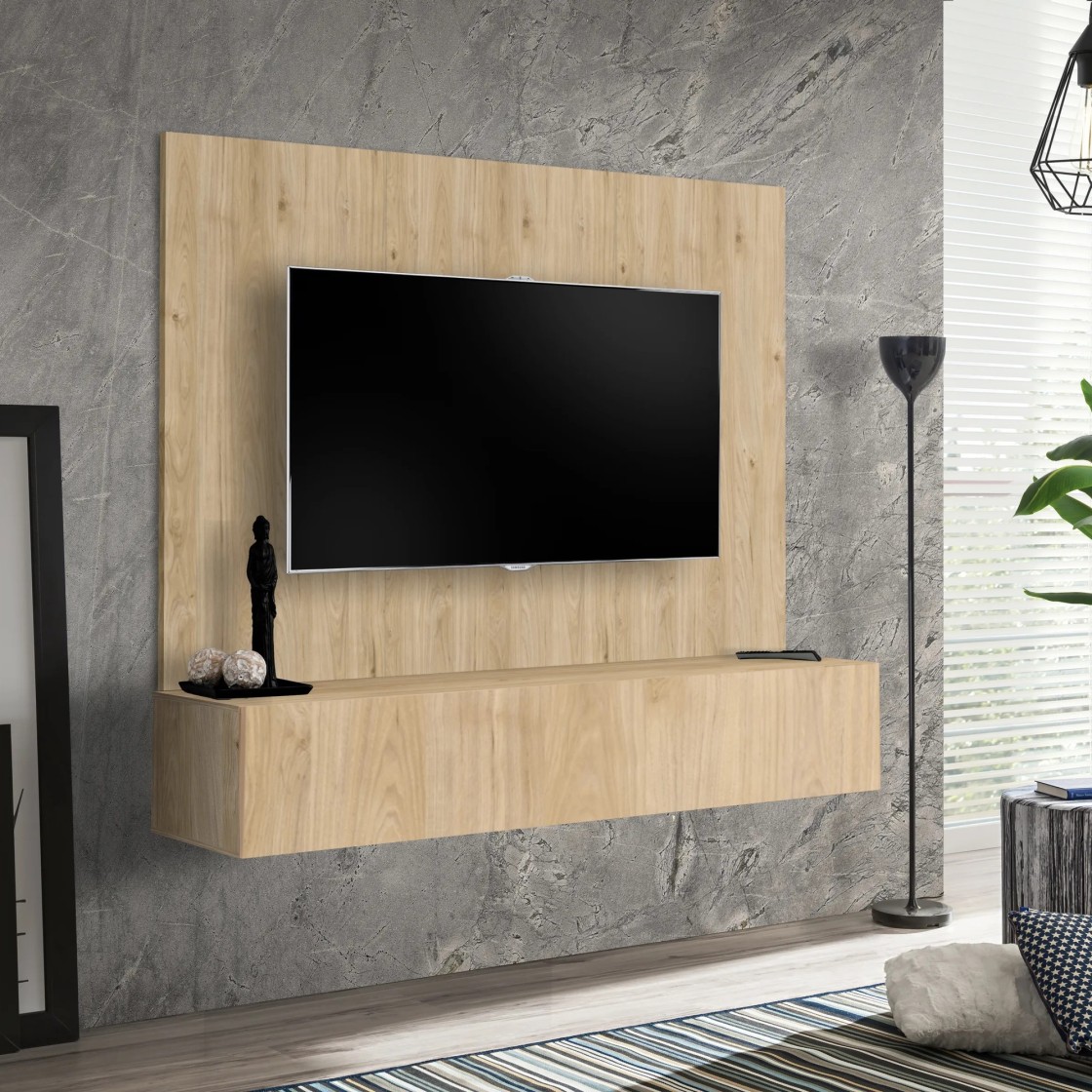
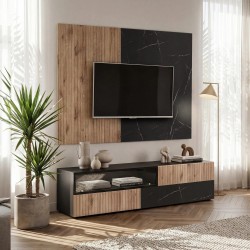
Two pieces that settle the screen area in one go: a wall panel and a low unit beneath it. The panel sets the background, the unit takes the kit, and the wall re..
₪5 479 ₪4 109
-25%
OakPre-order, 60-90 business days
Brand: ASM MEBLE (PL)
ID: 4075
280 × 45 × 180 cm
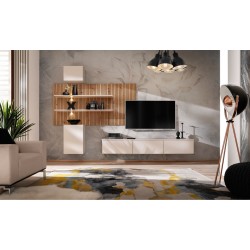
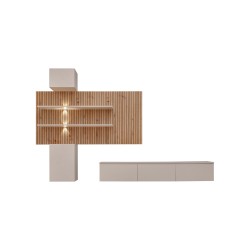
Of the four GUSTO variants this one takes the least vertical space and carries no closed additions. A slatted wall, a pair of shelves and a cabinet, all within ..
₪5 508 ₪4 131
-25%
OakPre-order, 60-90 business days
Brand: ASM MEBLE (PL)
ID: 5070
240 × 45 × 175 cm
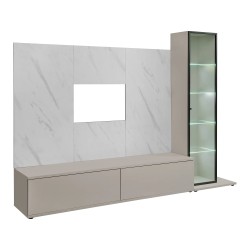
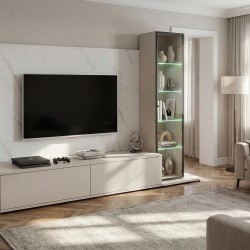
A development of the pale composition: a narrow glazed cabinet in a thin black frame stands to its right. Four glass shelves sit inside, each of them lit. In th..
₪5 539 ₪4 154


-25%
OakPre-order, 60-90 business days
Brand: ASM MEBLE (PL)
ID: 5135
160 × 40 × 148 cm
A short composition over 160 centimetres in which the middle of the unit is given to a bio fireplace. The flame burns bioethanol and needs neither a flue nor pe..
₪5 693 ₪4 270


-25%
Pre-order, 60-90 business days
Brand: ASM MEBLE (PL)
ID: 4603
160 × 35 × 158 cm
The compact version with diagonals and a hearth, a metre sixty along the wall. What the composition holds The composition holds a full width oak panel and a low..
₪5 719 ₪4 289


-25%
Pre-order, 60-90 business days
Brand: ASM MEBLE (PL)
ID: 4599
160 × 35 × 158 cm
The short version with a hearth: a metre sixty, fire below the television and no display. What the composition holds The composition holds a full width oak pane..
₪5 719 ₪4 289
-25%
OakPre-order, 60-90 business days
Brand: ASM MEBLE (PL)
ID: 5059
160 × 45 × 120 cm
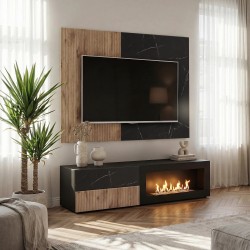
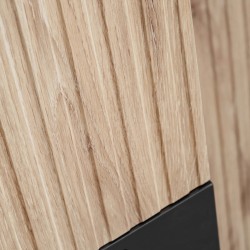
The same pairing of panel and unit across 160 cm, this time with a bio fireplace built into the unit. A live flame enters the room without a flue and without bu..
₪6 007 ₪4 505

-25%
OakPre-order, 60-90 business days
Brand: ASM MEBLE (PL)
ID: 5099
260 × 40 × 170 cm
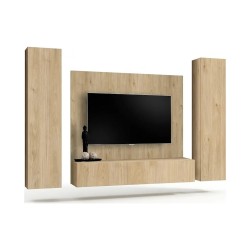
A version of the composition in which a solid panel takes the place of the shelves. The screen hangs straight onto it, the cables disappear behind the board, an..
₪6 007 ₪4 505

-25%
OakPre-order, 60-90 business days
Brand: ASM MEBLE (PL)
ID: 5100
260 × 40 × 170 cm
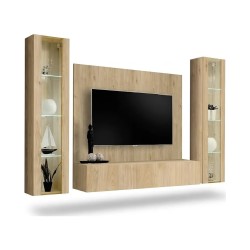
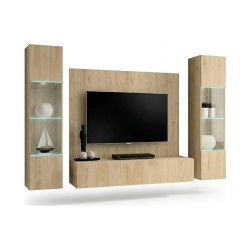
A composition with the panel for the screen at its centre and two lit glazed cabinets at the ends. By day the wall reads as a single plane, and after dark two g..
₪6 007 ₪4 505

-25%
OakPre-order, 60-90 business days
Brand: ASM MEBLE (PL)
ID: 5101
260 × 40 × 170 cm
A middle course between the closed and the fully glazed version: a panel for the screen at the centre, with columns at the ends carrying glass over part of thei..
₪6 007 ₪4 505


-25%
OakPre-order, 60-90 business days
Brand: ASM MEBLE (PL)
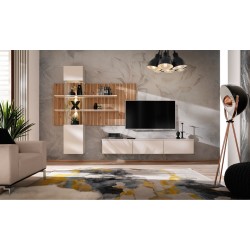
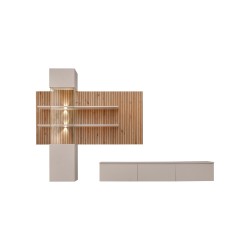
ID: 5151
300 × 45 × 160 cm
It stretches 300 centimetres along the wall, 160 in height, with carcasses 45 deep. The upper part is built from two wall panels with shelves whose light throws..
₪6 136 ₪4 602
-25%
OakPre-order, 60-90 business days
Brand: ASM MEBLE (PL)
ID: 4073
280 × 45 × 180 cm
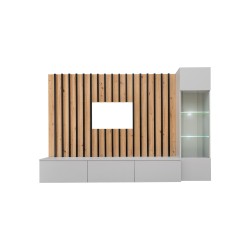
Version B repeats the set of the larger model but the composition sits lower, 180 cm rather than two hundred. The difference shows in a room with a standard cei..
₪6 201 ₪4 650
-25%
OakPre-order, 60-90 business days
Brand: ASM MEBLE (PL)
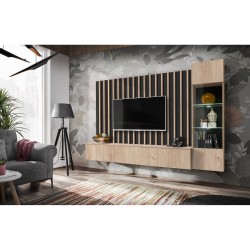
ID: 4060
220 × 35 × 148 cm
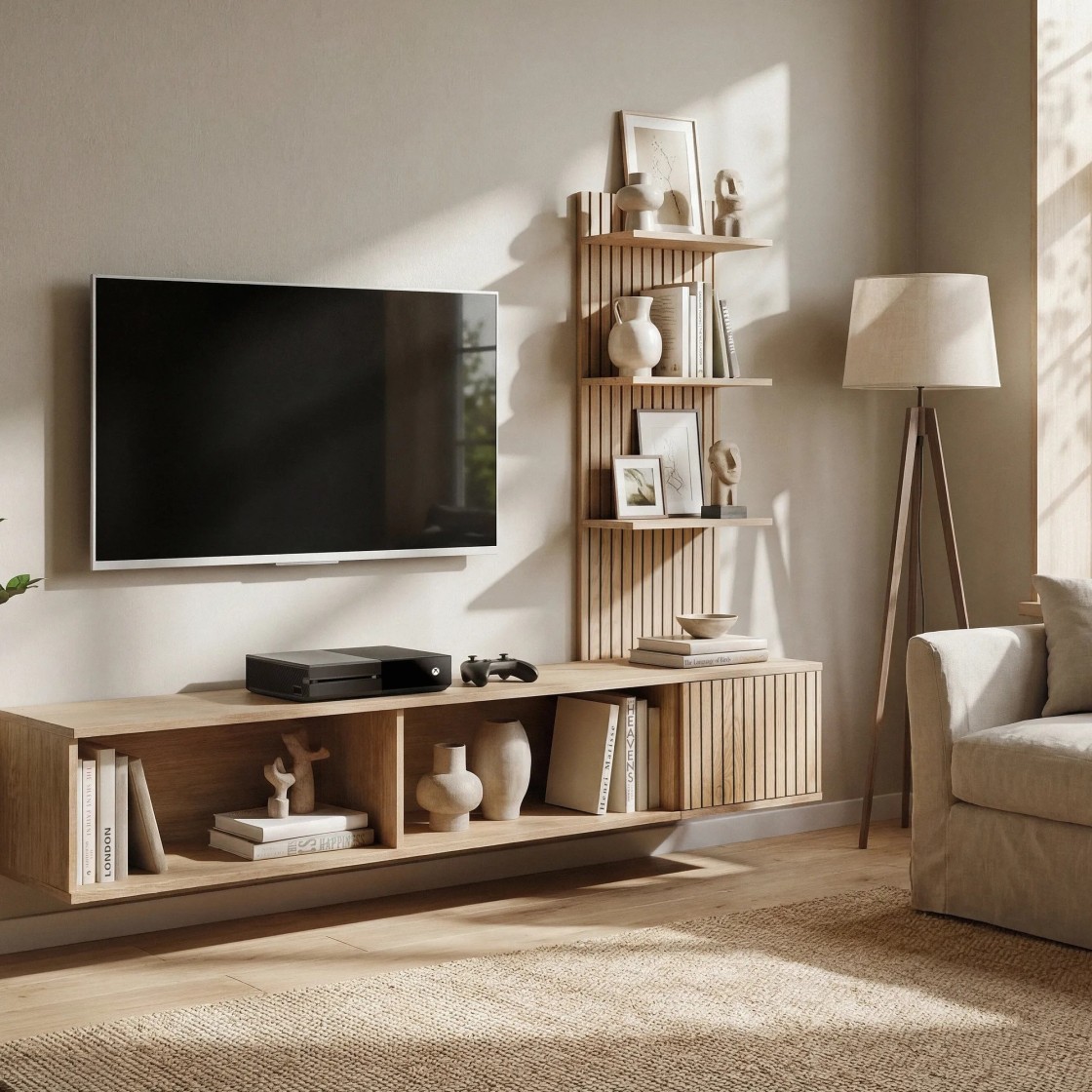
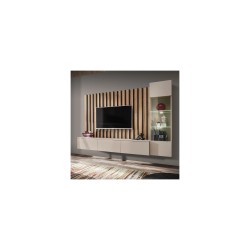
The whole structure fixes to the wall and never touches the floor. A panel of vertical slats runs behind the television, with a unit of flap doors hanging benea..
₪6 231 ₪4 673
-25%
BeigePre-order, 60-90 business days
Brand: ASM MEBLE (PL)
ID: 4061
220 × 35 × 148 cm
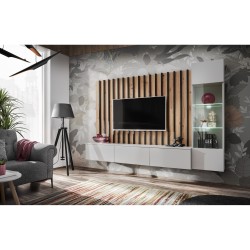
The whole structure fixes to the wall and never touches the floor. A panel of vertical slats runs behind the television, with a unit of flap doors hanging benea..
₪6 231 ₪4 673
-25%
GreyPre-order, 60-90 business days
Brand: ASM MEBLE (PL)
ID: 4058
220 × 35 × 148 cm
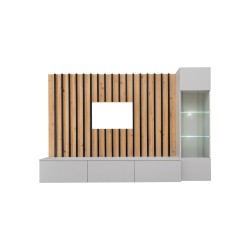
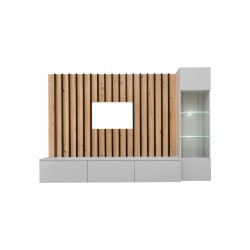
The whole structure fixes to the wall and never touches the floor. A panel of vertical slats runs behind the television, with a unit of flap doors hanging benea..
₪6 231 ₪4 673
-25%
BlackPre-order, 60-90 business days
Brand: ASM MEBLE (PL)
ID: 4059
220 × 35 × 148 cm
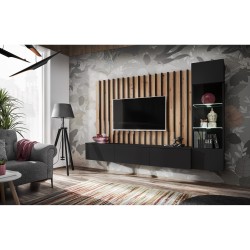
The whole structure fixes to the wall and never touches the floor. A panel of vertical slats runs behind the television, with a unit of flap doors hanging benea..
₪6 231 ₪4 673
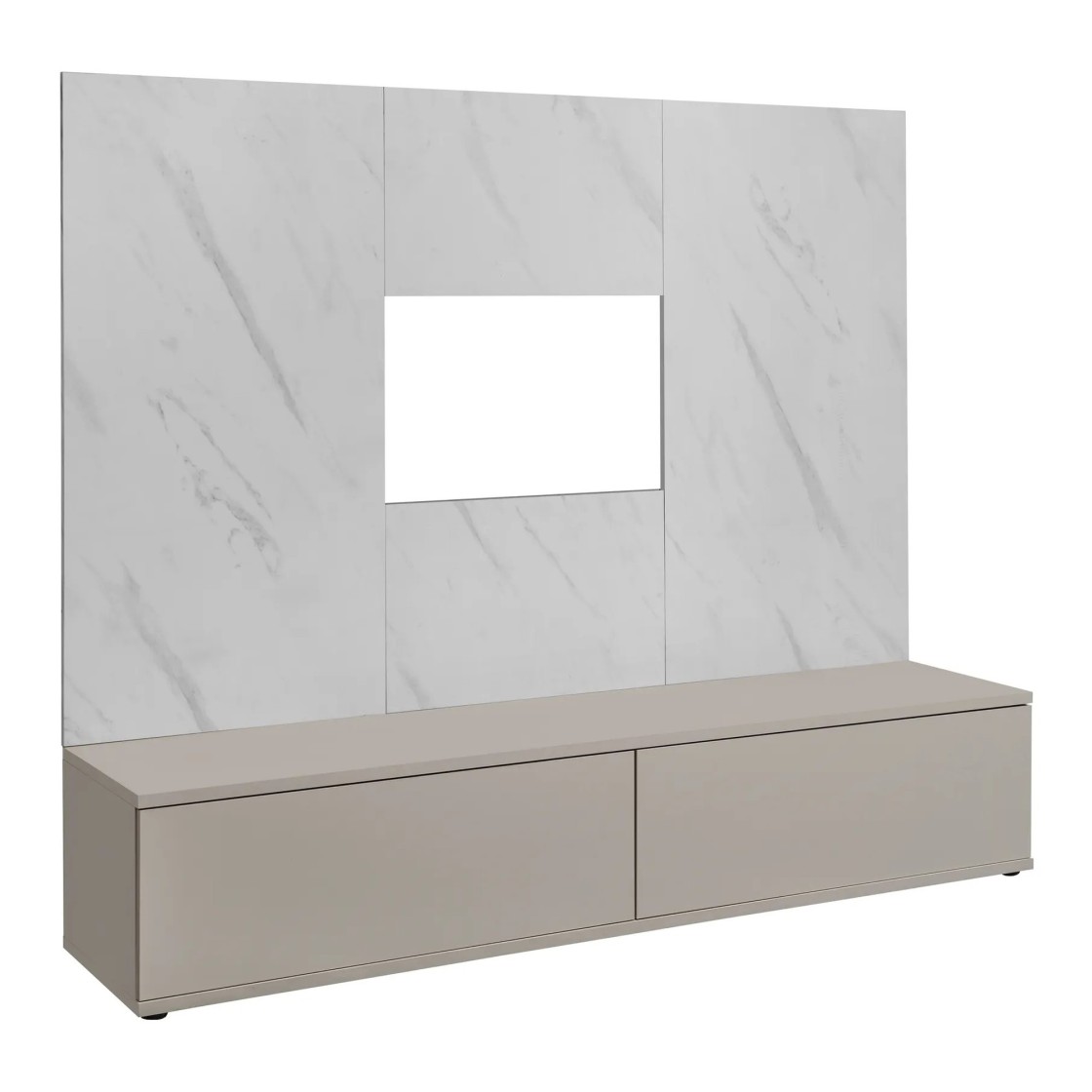
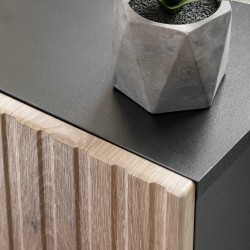
Printed. Diagonals, geometry and stripes printed or cut into the decor. A flat surface and the most restrained option of the three.
What this section holds
Here you will find both complete compositions built around the panel behind the screen and separate panels that hang beside a unit you already own. Some compositions come with cabinet lighting, some with a bio fireplace under the screen. Each piece carries its own dimensions and make-up, given on its own page.
Choosing by size
A panel is chosen wider than the screen so the television does not run past its edges: leave at least a hand span on each side. Panel height depends on the level at which you watch while seated. Polish furniture in Israel is bought online, and the width can be matched straight from the page.