



Select a category











| Robot class | Body height | Clearance needed |
|---|---|---|
| Premium, retractable lidar | about 8 cm | from 10 cm |
| Standard, lidar turret | 9.5–10.5 cm | from 12 cm |
| On a rug the robot rides higher | plus 1–2 cm | from 13 cm |
The takeaway is simple: 12 cm is the universal number. Almost any robot fits, with margin left for rugs and for the settling that happens over years. Under 9 cm the robot stalls, circles the piece, and the dust underneath stays there for good.
What stops a robot besides height
A solid plinth. The piece sits flat on the floor, no clearance at all.
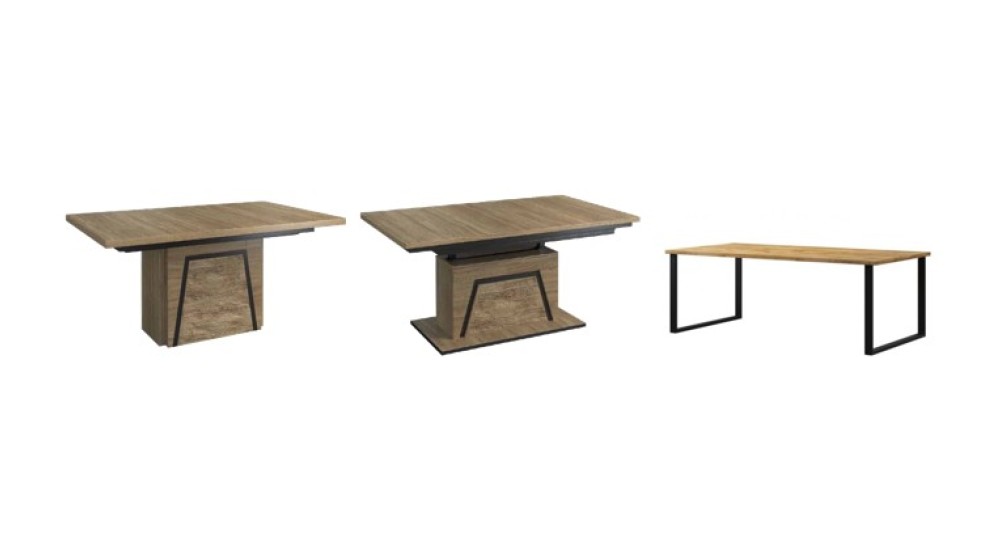
A table centre column or cross base. Corner legs get driven around, a cross in the middle does not.
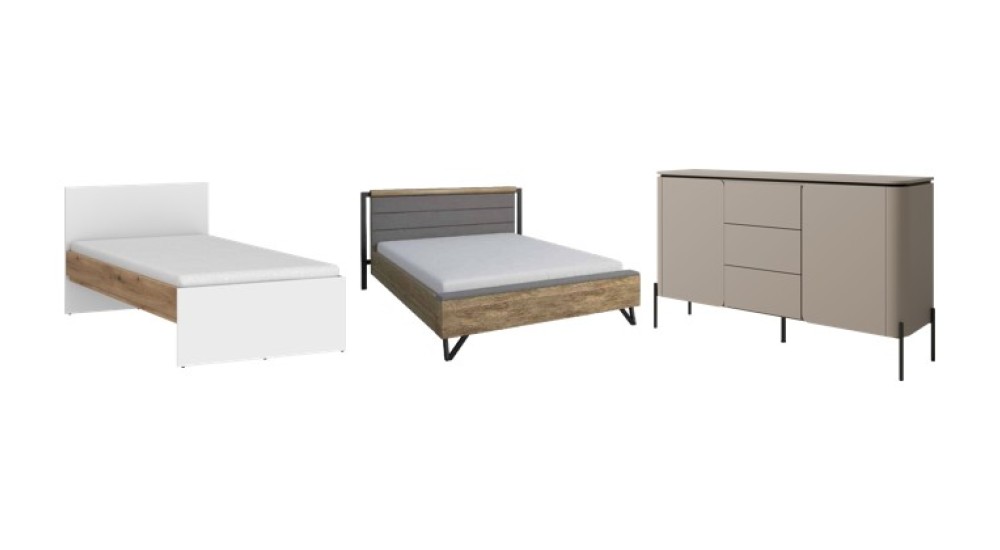
A low bed frame. The headboard may stand on tall legs while the frame sits almost on the floor.
Cables behind the TV unit. The robot winds up an extension cord and stops. High legs do not fix this, lift the cables.
What to pick, room by room
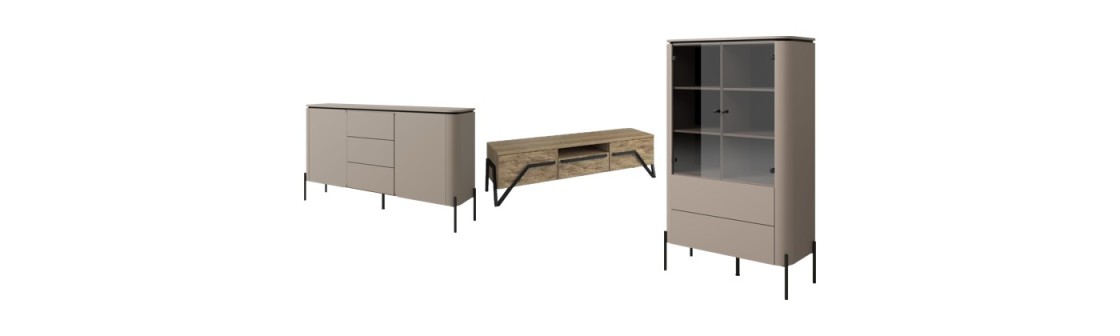
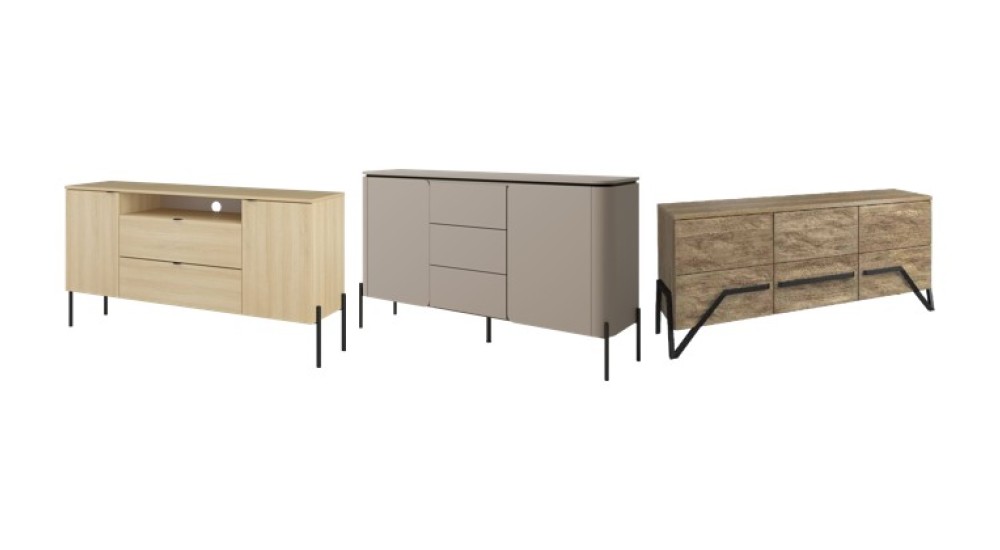
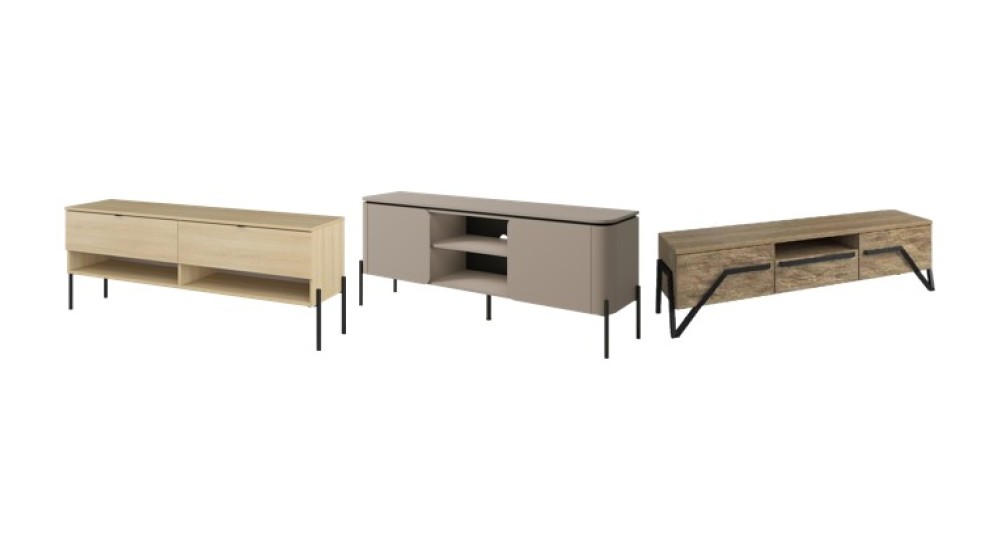
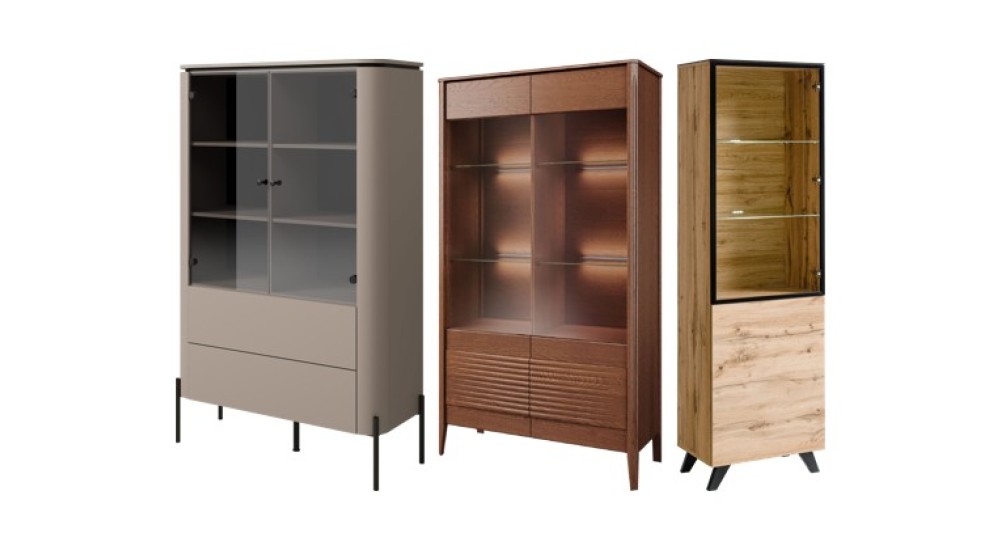
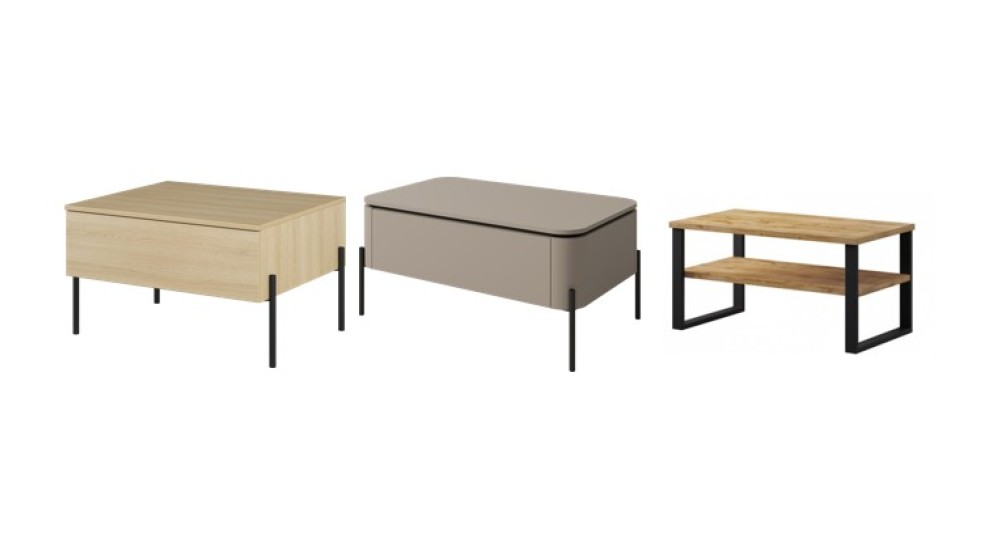
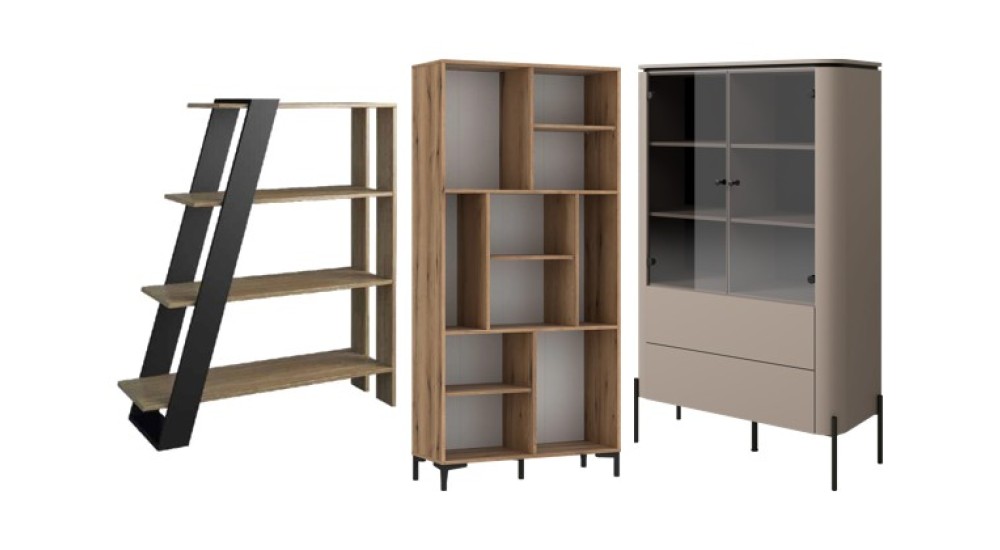
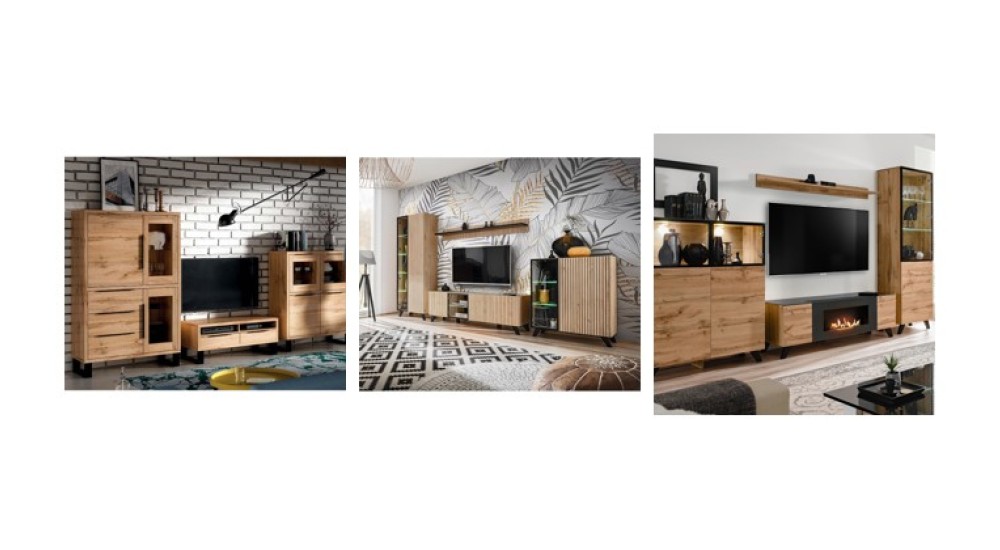
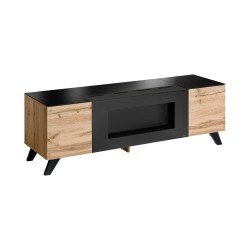
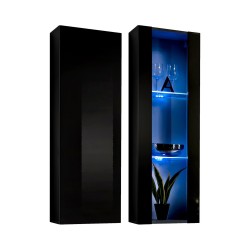
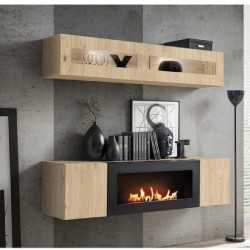
Living room. A TV unit on metal legs or wall-mounted, a display cabinet on high legs, a coffee table supported at the corners.
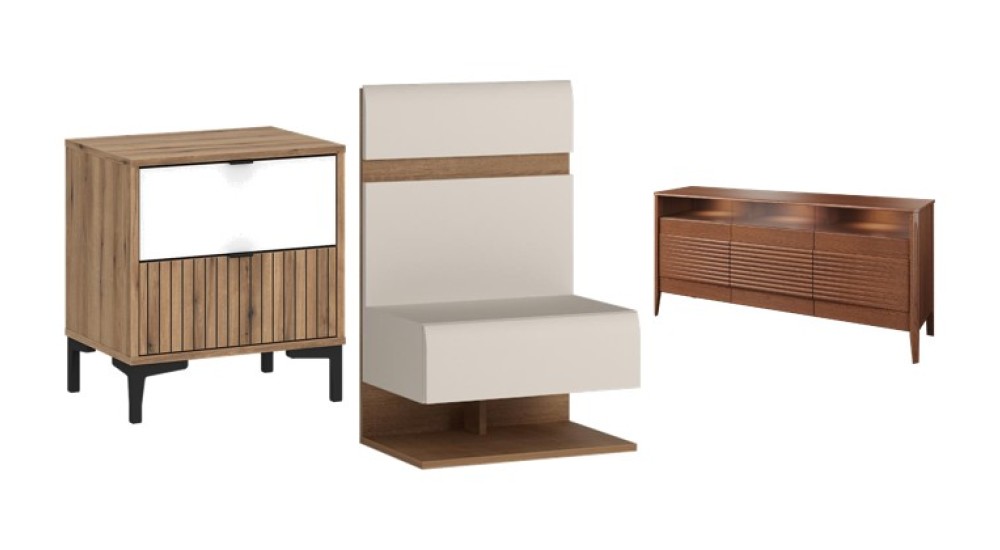
Bedroom. A bed with clearance under the frame, and wall-mounted bedside tables that never touch the floor at all.
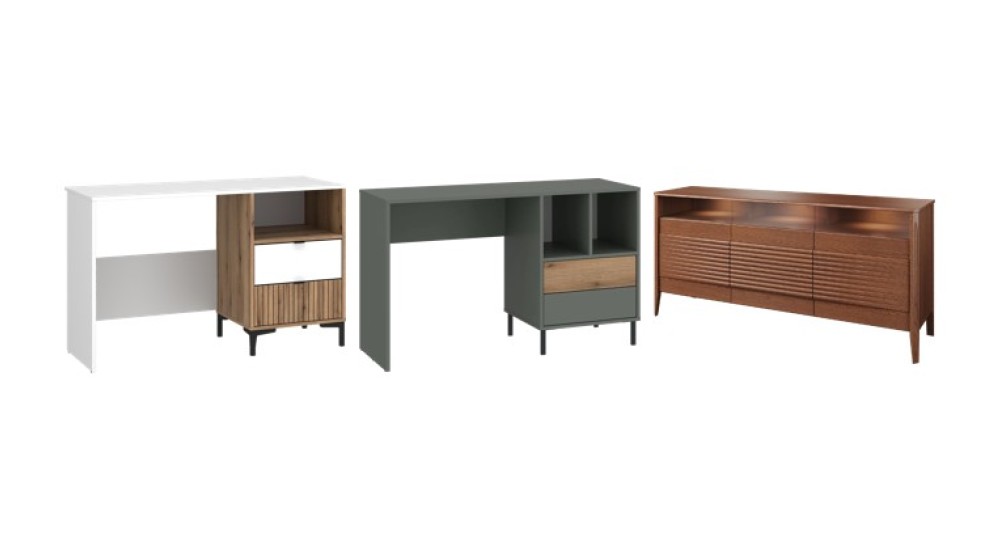
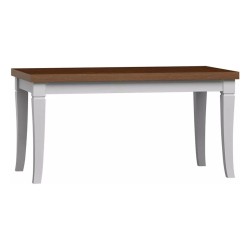
Dining area. A table on corner legs rather than a central pedestal.
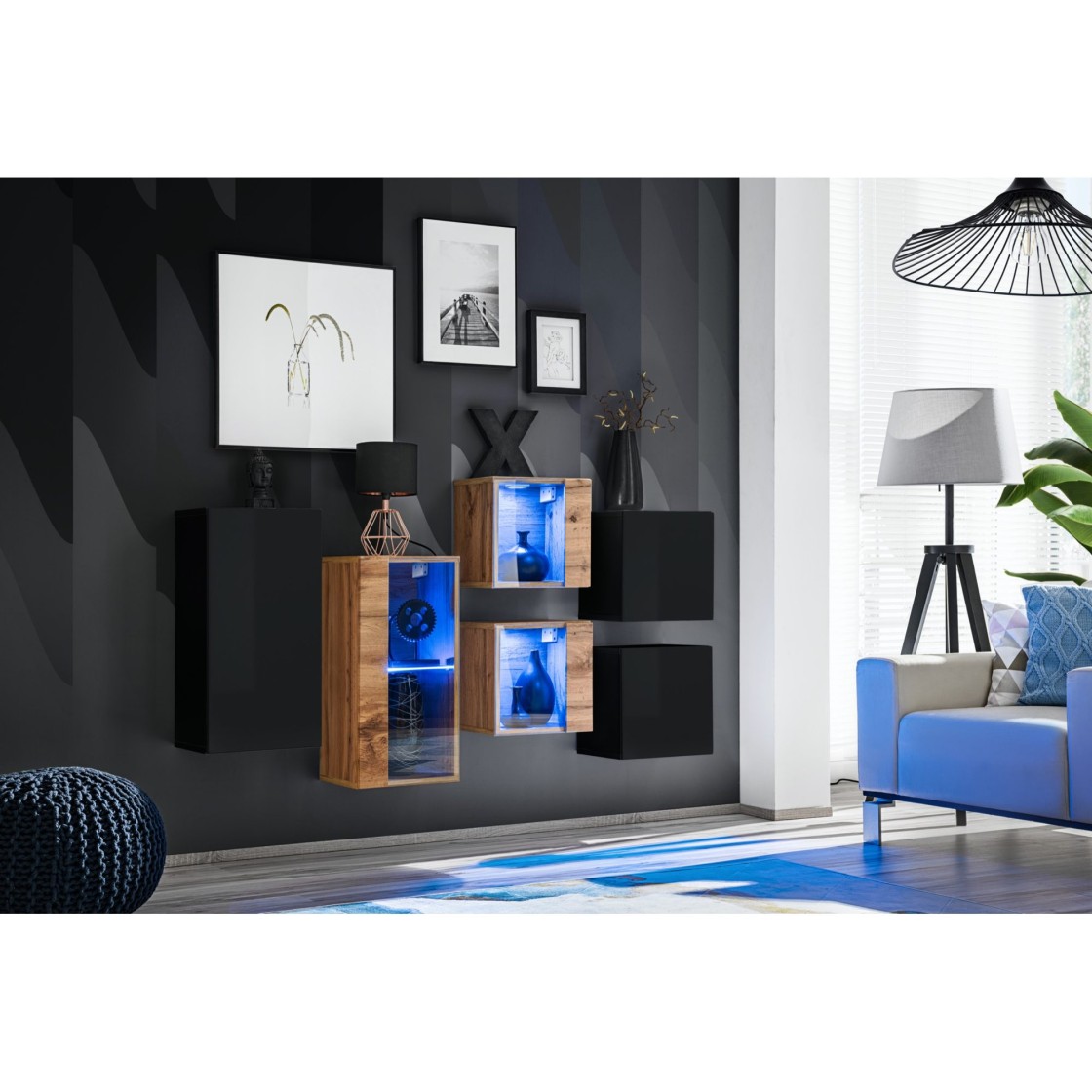
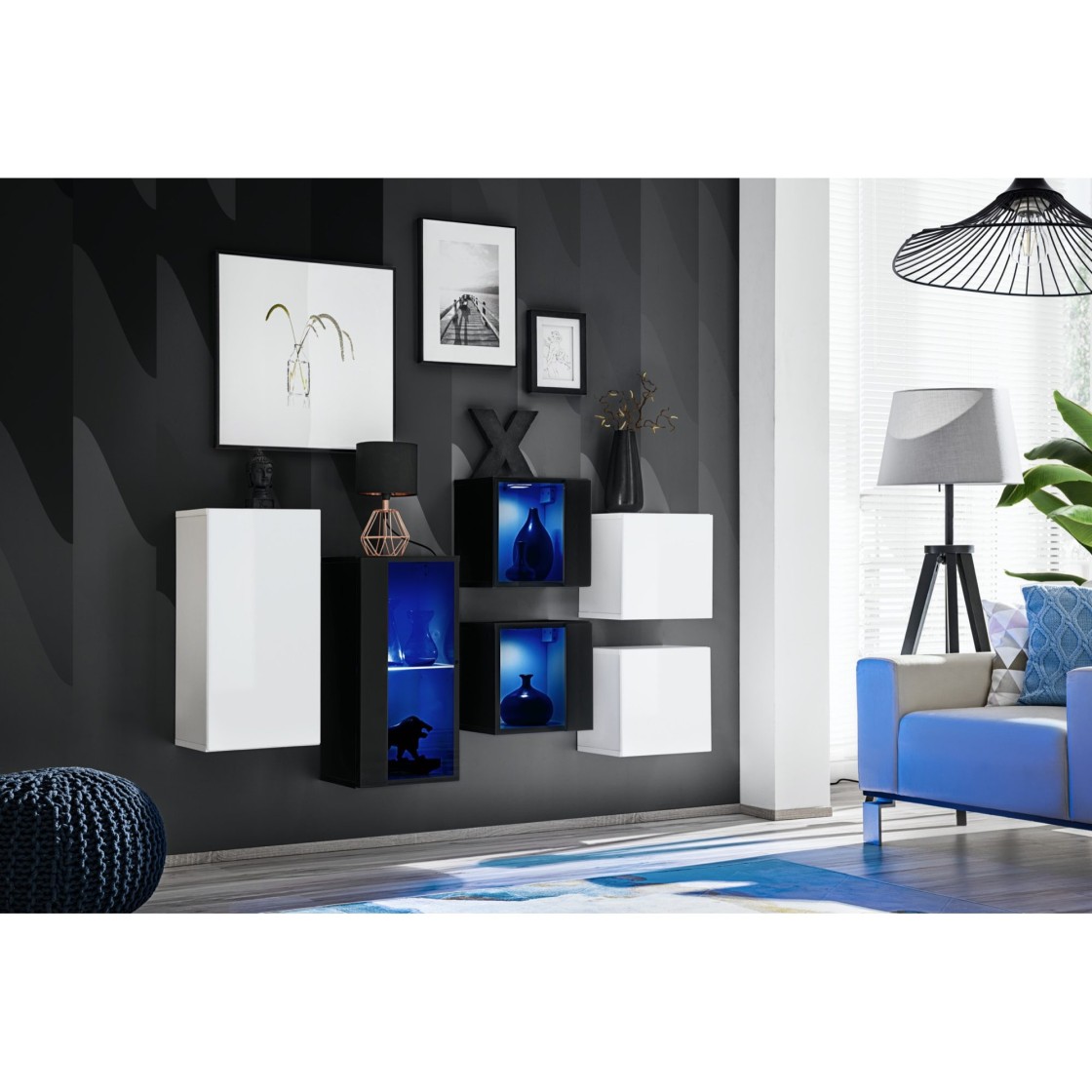
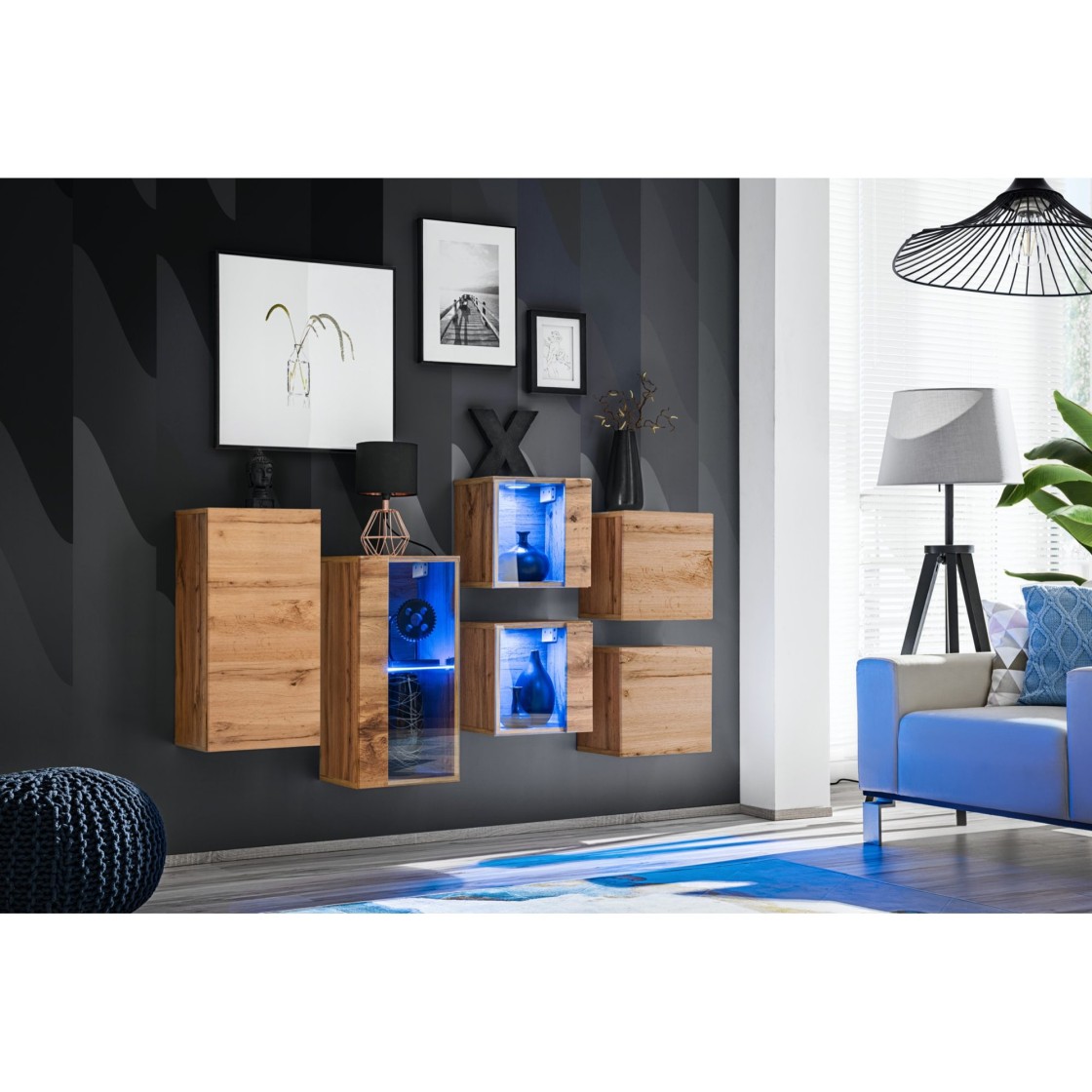
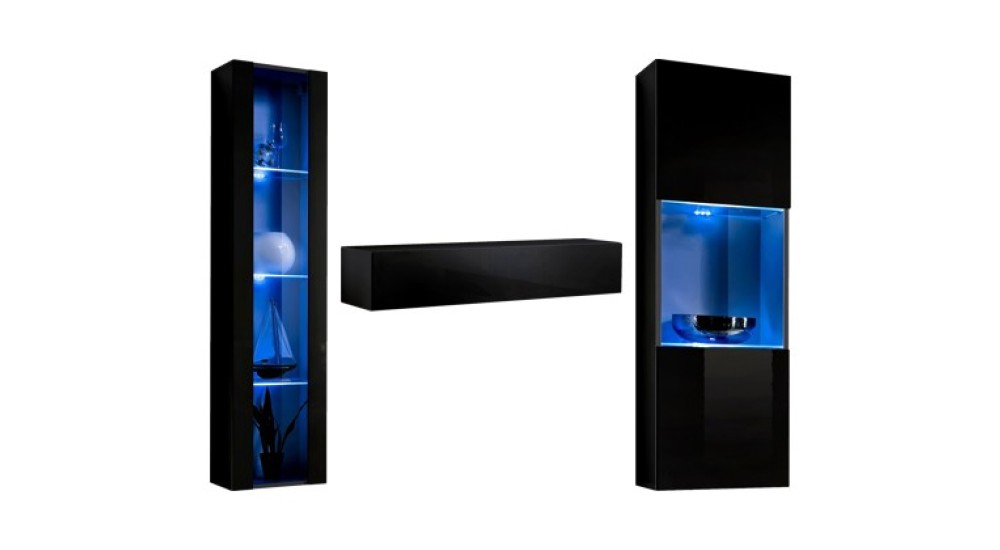
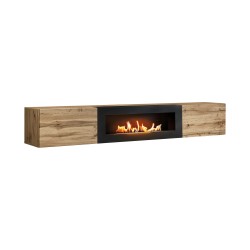
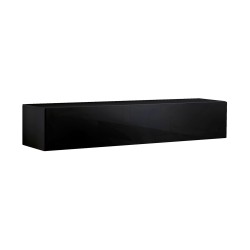
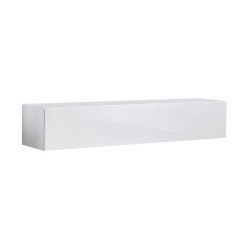
Entrance hall. A wall-mounted sideboard leaves the floor completely free: in a narrow corridor that is the only way to give a robot room to turn.
There is nothing under a wall-mounted piece: no legs, no dead corners, no shadow the robot cannot reach. One limitation – it needs a solid wall, plasterboard without backing will not hold.
Why Polish factories moved to legs
You can see it in our own catalogue: recent Polish collections are built almost without exception on a tall metal or turned wooden leg, while the plinth belongs to the older ones. Ten years ago furniture sat on a solid plinth because it was cheaper and looked more substantial. Today a robot vacuum lives in the house, followed by mopping robots and self-emptying docks that need floor space of their own, so factories started lifting the body. The leg stopped being decoration and became a function.
Frequently asked
How much clearance does a robot vacuum need?
From 12 cm – practically every model fits. From 10 cm only slim premium robots with a retractable lidar will pass.
Will the robot get under a bed?
Look at the frame, not the legs. A bed can stand on tall legs while its rail drops almost to the floor.
Can I just screw legs onto furniture I already own?
You can, legs are sold separately. But a body designed for a plinth does not always take point loading, and the factory warranty does not cover that change.
How much weight does a wall-mounted sideboard hold?
It depends on the fixings and the wall. The factory supplies hardware for concrete or solid brick. Plasterboard needs backing, the fitter handles it.
Do thin metal legs confuse a robot?
No. Sensors read a leg as an obstacle and drive around it. What actually causes trouble is cables and the low fabric skirts of sofas.
Is everything here Polish?
Yes. Only MEBIN, HELVETIA, CAMA, MEBLE WOJCIK, ASM MEBLE, MEBDOM and LASKI MEBLE.
Delivery
We deliver across Israel, the cost is shown on the product page.